
في مقال عن الطب النفسي، الكاتب كان بيوضح الفرق بين ارتفاع الاحتمال الإحصائي وحتمية النتيجة في الإصابة بالاضطرابات النفسية نتيجة التعرض لظروف معينة.
An article on mental health drew a distinction that stayed with me: a higher statistical likelihood of developing a condition is not the same as an inevitable outcome.
يعني وجود ظروف أو تجارب معينة ممكن يرفع احتمالية الإصابة باضطراب نفسي بشكل كبير، لكن ده مش معناه إن كل شخص مر بالظروف دي لازم يُصاب بالاضطراب.
Certain circumstances or experiences may substantially increase the risk of a mental health condition. That does not mean everyone who goes through them will develop it.
الحقيقة الفكرة استوقفتني، لأن ليها انعكاسات كبيرة على حياتنا وخططنا عمومًا، وعلى القرارات الإدارية والمالية بشكل خاص.
The distinction matters far beyond that context. It has implications for how we plan our lives and, in particular, how we make business and financial decisions.
إحنا أحيانًا بنتعامل مع الاحتمال المرتفع كأنه نتيجة مضمونة، وبنبني قراراتنا على الأساس ده من غير ما ناخد بالنا.
Sometimes we quietly turn a high probability into a guarantee, then build our decisions around it without noticing.
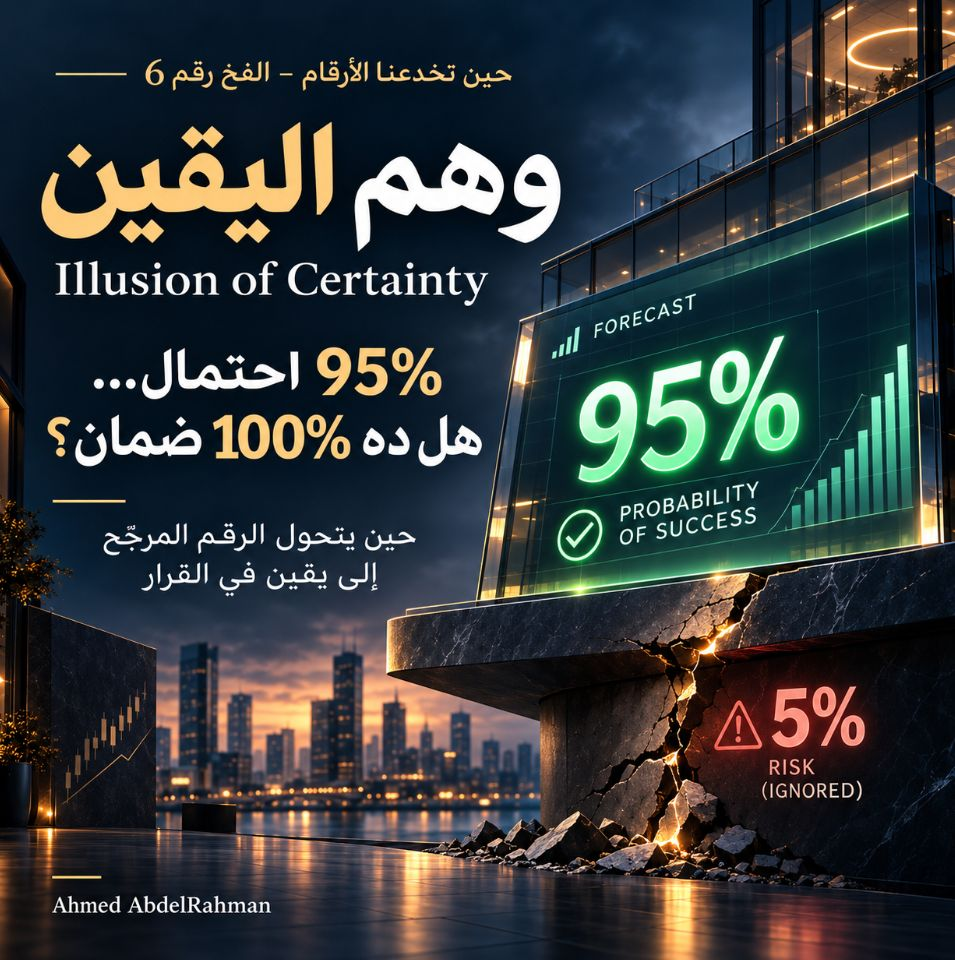
95% احتمال… هل ده 100% ضمان؟
A 95% probability is not a guarantee
تخيل مثلًا إن شركتك منتظرة تحصيل مبلغ كبير يوم الخميس، وفريق التحصيل بيقول إن احتمال وصول المبلغ في موعده 95%.
Imagine your company expects a substantial customer payment on Thursday. The collections team puts the probability of receiving it on time at 95%.
رقم مطمئن جدًا، وممكن يكون مبني على بيانات وتحليل ممتازين. لكن هل ده معناه إنك تقدر ترتب التزامات نقدية واجبة السداد يوم الجمعة، اعتمادًا على المبلغ ده، ومن غير ما يكون عندك أي بديل؟
That is reassuring, and the estimate may be backed by excellent data and analysis. But does it justify committing to payments due on Friday, relying entirely on that receipt with no fallback?
هنا بيظهر فخ مهم في اتخاذ القرارات: وهم اليقين | Illusion of Certainty. إننا نبدأ بنتيجة مرجحة إحصائيًا، ونتعامل معاها تدريجيًا كأنها حقيقة مؤكدة.
This is the decision trap I call the illusion of certainty: a statistically likely outcome gradually becomes an established fact in our thinking.
احتمال 95% معناه إن السيناريو مرجح جدًا، بافتراض إن التقدير نفسه سليم. لكنه مش وعد بأن النتيجة هتتحقق في المرة دي تحديدًا. والـ5% الباقية مش مجرد هامش صغير نقدر نتجاهله.
A 95% probability means the outcome is highly likely, assuming the estimate is sound. It does not promise that it will happen this time. Nor is the remaining 5% simply a rounding error we can ignore.
لأن السؤال مش بس: ما احتمال حدوث الخطر؟ لكن كمان: ماذا لو حدث؟ وهل نقدر نتحمل عواقبه؟
The question is not only, “How likely is the risk?” It is also, “What happens if it materialises, and can we absorb the consequences?”
لو التحصيل اتأخر يومين، وكانت النتيجة تأجيل مصروف غير ضروري، فالأثر ممكن يكون محدود.
If a two-day delay merely postpones a non-essential expense, the impact may be modest.
لكن لو نفس التأخير هيؤدي لعجز عن الوفاء بالتزامات مستحقة، أو الإخلال بشروط تمويل، أو تعطيل عمليات أساسية، فإحنا قدام مخاطرة تستحق تعاملًا مختلفًا، حتى لو احتمال وقوعها 5% فقط.
If the same delay leaves the company unable to meet obligations, breaches financing terms, or disrupts essential operations, it calls for a different response, even with only a 5% chance of happening.
المتوسط الاحتمالي مش بالضرورة نتيجة ممكنة
The average may not be a possible outcome
وأحيانًا المشكلة مش بس إننا بنبالغ في الثقة بالاحتمالات، لكن كمان في الطريقة اللي بنستخدم بيها الاحتمالات دي في التخطيط.
The problem is not always excessive confidence in probabilities. Sometimes it is how we use them in planning.
خلينا ناخد مثال من إعداد الموازنة. شركة داخلة مناقصة، لو كسبتها هتحقق إيراد مليون جنيه، واحتمال الفوز المقدر 50%.
Consider a budgeting example. A company is bidding for a contract worth EGP 1 million in revenue, with an estimated 50% chance of winning.
هل من المنطقي نحط في الموازنة إيراد 500 ألف جنيه، باعتباره حاصل ضرب المليون في احتمال الفوز؟ الحسبة صحيحة رياضيًا، واسمها Expected Value. لكن هل هي مفيدة في الحالة دي؟
Should the budget include EGP 500,000 of revenue, calculated by multiplying the contract value by the probability of winning? The calculation is mathematically correct: it is the expected value. But how useful is it for this particular decision?
الشركة مش هتكسب نص المناقصة. هي إما هتكسبها أو هتخسرها.
The company will not win half the contract. It will either win it or lose it.
لو خسرت، هيظهر عندك انحراف سلبي عن الموازنة بقيمة 500 ألف جنيه. ولو كسبت وحققت المليون، هيظهر انحراف إيجابي بنفس القيمة.
If it loses, the budget shows an adverse revenue variance of EGP 500,000. If it wins and earns the full million, it shows a favourable variance of the same amount.
مع إن أيًا من النتيجتين مش بالضرورة دليل على ضعف التخطيط أو جودة الأداء. هما ببساطة نتيجتان محتملتان من البداية.
Neither result necessarily tells us that planning was poor or performance was strong. Both were possible from the outset.
هنا المتوسط الاحتمالي مش بالضرورة نتيجة ممكنة أصلًا، واستخدامه كسطر إيراد في موازنة مناقصة واحدة ممكن يخلي تحليل الانحرافات مضلل لو تعاملنا معاه باعتباره معيارًا للأداء.
Here, the probability-weighted average is not even an outcome that can occur. Using it as the revenue budget for a single bid can make variance analysis misleading if we treat it as a performance benchmark.
وده مش معناه إن استخدام الاحتمالات في التخطيط المالي غلط. لو عندك محفظة كبيرة من المناقصات أو العقود المستقلة نسبيًا، فالـExpected Value ممكن يكون أداة مفيدة جدًا لتقدير إجمالي الإيرادات المتوقعة.
That does not make probability-weighted planning wrong. Across a large portfolio of reasonably independent bids or contracts, expected value can be a highly useful way to estimate aggregate revenue.
لكن في الحالات الفردية ذات النتائج الثنائية، أحيانًا يكون الأفضل نعرض السيناريوهين وتأثير كل واحد، بدل ما نختزلهم في متوسط مش هيتحقق في أي منهما.
For a single, binary outcome, however, it may be more useful to show both scenarios and their implications than to reduce them to an average that neither scenario will produce.
Expected Value is not necessarily an Expected Outcome.
An expected value is not necessarily an outcome you can expect to observe.
احتمال التعثر مش حكم على مصير العميل
A default probability is not a verdict on a borrower
ونفس المنطق ينطبق على إدارة محافظ التمويل. لو نموذج بيقدّر احتمال تعثر عميل بنسبة 2%، فده لا يعني إن العميل بالتأكيد هيسدد، ولا إنه بالتأكيد هيتعثر.
The same reasoning applies to lending portfolios. A model assigning a borrower a 2% probability of default does not establish that the borrower will repay, or that they will default.
النسبة تقدير للمخاطر، مش حكم مسبق على مصير العميل. وعلى مستوى المحفظة، ممكن نستفيد من التقديرات دي في التسعير وإدارة المخاطر وتقدير الخسائر الائتمانية المتوقعة. لكن ده لا يحولها لضمان بشأن أي حالة فردية.
It is a risk estimate, not a verdict on that borrower’s future. At portfolio level, such estimates can inform pricing, risk management, and expected credit losses. They still offer no guarantee about any individual case.
واثقين قد إيه في تقدير الاحتمال نفسه؟
How much confidence should we place in the estimate?
وفيه مشكلة تانية لا تقل أهمية: قد إيه إحنا واثقين أصلًا في تقدير الاحتمال نفسه؟ هل النموذج مبني على بيانات كافية؟ هل تم اختباره؟ وهل الظروف اللي أنتجت البيانات التاريخية لسه موجودة؟
There is another equally important question: how reliable is the probability estimate itself? Is the model based on enough data? Has it been tested? Do the conditions behind the historical data still hold?
لأن فيه فرق بين إن النموذج يقول إن احتمال النجاح 95%، وإننا نكون متأكدين فعلًا إن تقدير الـ95% ده دقيق.
A model reporting a 95% chance of success is one thing. Having good reason to trust that 95% estimate is another.
وده فخ إضافي: الثقة في الرقم ممكن تتحول من غير ما نحس إلى ثقة مبالغ فيها في الافتراضات اللي أنتجته.
That creates an additional trap: confidence in the number can quietly become overconfidence in the assumptions behind it.
هل القرار يظل قابلًا للتحمل لو التوقع طلع غلط؟
Can we live with the decision if the forecast is wrong?
وطبعًا مش المقصود إننا نستعد لأسوأ احتمال في كل قرار، أو نجمد موارد الشركة تحسبًا لكل خطر ممكن. ده في حد ذاته قرار غير رشيد.
This is not an argument for preparing for the worst in every decision or tying up company resources against every conceivable risk. That would be poor judgment in its own right.
الإدارة الجيدة محتاجة توازن بين احتمالية الخطر، وحجم أثره، وتكلفة الاستعداد له، وقدرتنا على استيعاب نتائجه.
Good management balances the likelihood of a risk, the severity of its impact, the cost of preparing for it, and the organisation’s capacity to absorb the consequences.
يمكن عشان كده من أهم الأسئلة اللي لازم نسألها لما نراجع أي خطة مالية أو قرار استثماري: لو السيناريو المرجح ما حصلش، هل قرارنا لسه قابل للتحمل؟
That makes one question especially valuable when reviewing a financial plan or investment decision: if the most likely scenario does not happen, can we still live with the decision?
لأن المشكلة مش إن التوقعات ممكن تخطئ. ده جزء طبيعي من التعامل مع المستقبل. المشكلة إننا نبني خططنا وكأن الخطأ مستحيل، أو نتعامل مع المتوسطات الإحصائية وكأنها نتائج مؤكدة.
Forecasts being wrong is not the problem; uncertainty is part of dealing with the future. The problem is building plans as though error were impossible, or treating statistical averages as guaranteed outcomes.
ارتفاع الاحتمال لا يعني حتمية النتيجة. والقرار الجيد مش بس اللي ينجح لو توقعاتنا طلعت صح، لكن اللي نكون فاهمين عواقبه لو طلعت غلط.
High probability does not mean certainty. A good decision is not simply one that works when the forecast is right. It is one whose consequences we understand when the forecast is wrong.
مغالطات وانحيازات وفخاخ قرار قد تواجه الماليين.
Fallacies, biases, and decision traps finance professionals may face.