
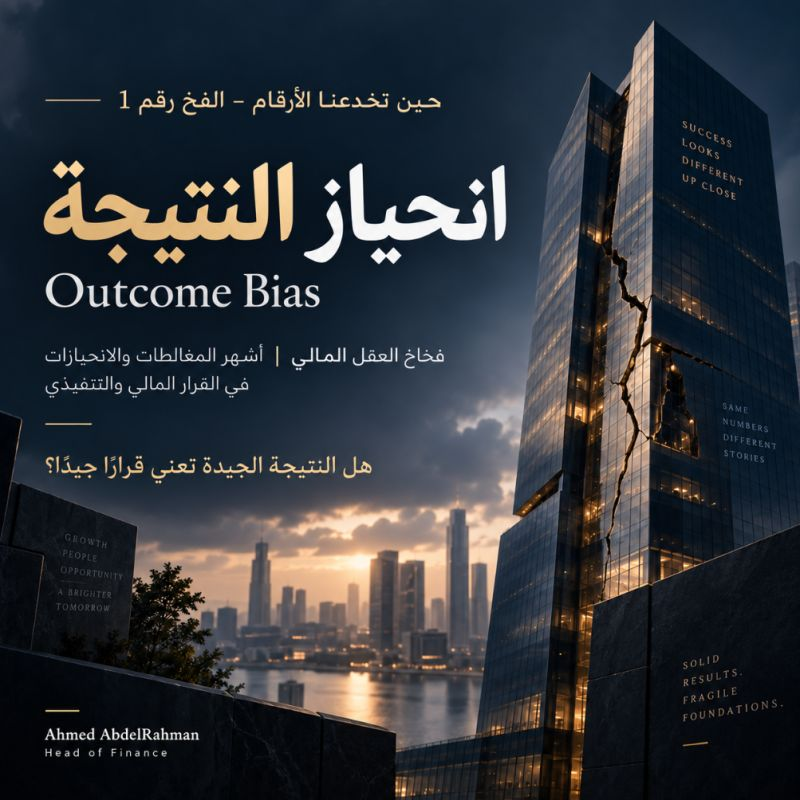
ليس كل قرار انتهى بنتيجة جيدة قرارًا جيدًا، وليس كل قرار انتهى بنتيجة سيئة قرارًا سيئًا.
Not every decision that ended well was a good decision, and not every decision that ended badly was a bad one.
هذا ما يُعرف بـانحياز النتيجة | Outcome Bias، وهو انحياز قد يدفع الشركة إلى تعلّم الدرس الخطأ.
This is outcome bias, and it can lead an organization to learn the wrong lesson.
نحكم على جودة القرار بالنتيجة التي ظهرت بعده، بدلًا من الحكم عليه بالمعلومات والمنطق اللذين كانا متاحين لحظة اتخاذه.
We judge a decision by the result that followed it, rather than by the information and reasoning available when it was made.
مثال بسيط
A simple example
توافق الإدارة على استثمار كبير رغم ضعف دراسة الجدوى، وتفاؤل الافتراضات، وقصور دراسة المخاطر. ثم يتحسن السوق فجأة، ويحقق المشروع أرباحًا ممتازة.
Management approves a major investment despite a weak business case, optimistic assumptions, and poorly assessed risks. Then the market unexpectedly improves, and the project delivers excellent profits.
النتيجة؟ "كان قرارًا عبقريًا".
The verdict? “It was a brilliant decision.”
ليس بالضرورة. فقد يكون القرار سيئًا وخدمه الحظ. والعكس صحيح: قد يُبنى قرار على تحليل جيد وافتراضات منطقية ومخاطر محسوبة، ثم يطرأ ظرف خارجي غير متوقع فتأتي النتيجة سيئة. وهذا لا يجعل القرار نفسه سيئًا.
Not necessarily. The decision may have been poor and luck rescued it. The reverse is also true: a decision can rest on sound analysis, reasonable assumptions, and measured risks, then be hurt by an unforeseeable external event. That does not make the decision itself bad.
الدرس الخطأ
The wrong lesson
قد تكافئه الشركة وتكرر طريقة التفكير نفسها.
The organization may reward it and repeat the same reasoning.
قد تعاقبه الشركة وتتخلى عن منهجية كانت سليمة.
The organization may punish it and abandon a sound process.
لذلك، عند مراجعة أي قرار استثمار أو تسعير أو توسع أو تخصيص للموازنة، يجب الفصل بين سؤالين:
So when reviewing any investment, pricing, expansion, or budget allocation decision, separate two questions:
- هل كانت النتيجة جيدة؟
- Was the outcome good?
- هل كان القرار نفسه جيدًا بالمعلومات المتاحة حينها؟
- Was the decision itself good given the information available at the time?
السؤالان مختلفان.
They are two different questions.
أفضل حماية: وثّق القرار قبل أن تعرف النتيجة
The best defence: document the decision before the outcome
- ما الافتراضات؟
- What were the assumptions?
- ما المخاطر؟
- What were the risks?
- ما البدائل التي دُرست؟
- What alternatives were considered?
- ولماذا اخترنا هذا المسار تحديدًا؟
- Why was this path chosen?
وبعد ظهور النتيجة، نعود إلى ما وثّقناه ونراجعه، لا لنعرف "من كان على حق"، بل لنعرف: هل كانت هذه النتيجة ثمرة قرار جيد، أم مجرد حظ جيد؟
Once the outcome appears, revisit the record, not to decide who was right, but to ask whether the result came from a good decision or merely from good luck.
هذا هو الفرق بين إدارة النتائج وإدارة جودة القرار.
That is the difference between managing outcomes and managing decision quality.
مغالطات وانحيازات وفخاخ قرار قد تواجه الماليين.
Fallacies, biases, and decision traps finance professionals may face.