
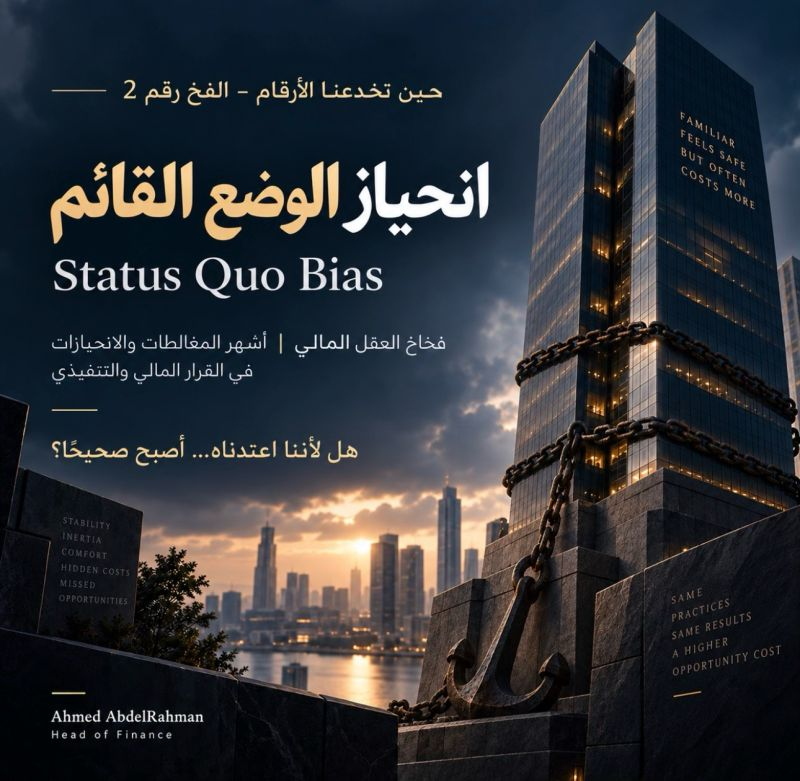
"هكذا نفعلها منذ سنوات". عبارة تبدو مطمئنة، وكثيرًا ما تكون سبب استمرار قرار لم يعد له أي منطق.
“We have always done it this way.” It sounds reassuring, and it can keep an obsolete decision alive long after its logic has disappeared.
هذا ما يُعرف بـانحياز الوضع القائم | Status Quo Bias: ميلنا إلى تفضيل الوضع الحالي لمجرد أنه الوضع الحالي، حتى حين تظهر بدائل أفضل.
This is status quo bias: our tendency to prefer the current state simply because it already exists, even when better alternatives have emerged.
المشكلة أن الاستمرار يبدو غالبًا أقل مخاطرة من التغيير. لكن الحقيقة أن عدم اتخاذ قرار بالتغيير هو نفسه قرار، له مخاطره وتكلفته.
Continuing often feels safer than changing. But choosing not to change is still a decision, with its own risks and costs.
المألوف يحصل على أفضلية مجانية
Familiarity gets an unfair advantage
تتعامل شركة مع المورد نفسه منذ سنوات. ارتفع السعر، وتراجع مستوى الخدمة، وظهرت بدائل أفضل، وتغيرت احتياجات الشركة نفسها. ومع ذلك نسمع عند التجديد: "لنبقَ كما نحن، فعلى الأقل نحن نعرفه".
A company has used the same supplier for years. Prices rise, service declines, better alternatives emerge, and the company’s needs change. Yet at renewal the answer is: “Let’s stay where we are. At least we know them.”
هنا يحصل الوضع الحالي على أفضلية، لا لأنه الأفضل، بل لأنه المألوف.
The current option now enjoys an advantage not because it is better, but because it is familiar.
أين يظهر هذا الانحياز؟
Where does the bias appear?
- عملية تُنفَّذ يدويًا رغم إمكانية أتمتتها.
- A manual process that could be automated.
- منتج ضعيف يستمر لأنه "جزء من العمل منذ زمن".
- A weak product retained because it has “always been part of the business.”
- هيكل تنظيمي لم يعد مناسبًا لحجم الشركة.
- An organizational structure that no longer fits the company’s scale.
- علاقة مصرفية أو مورد أو نظام لم يُعَد تقييم أيٍّ منها بجدية.
- A bank relationship, vendor, or system that no one has seriously reassessed.
- بند في الموازنة يُرحَّل من سنة إلى أخرى لمجرد أنه كان موجودًا من قبل.
- A budget line carried forward each year simply because it was there before.
تكلفة ظاهرة وتكلفة خفية
A visible cost and a hidden one
المشكلة أن تكلفة التغيير تكون واضحة أمامنا، أما تكلفة عدم التغيير فغالبًا ما تبقى خفية.
The cost of change is usually visible. The cost of not changing often stays hidden.
- نرى تكلفة تنفيذ نظام جديد، ولا نحسب ساعات العمل التي نهدرها كل شهر في النظام القديم.
- We see the implementation cost of a new system, but not the hours wasted every month on the old one.
- نرى تكلفة تغيير المورد، ولا نقيس تكلفة ضعف الخدمة الذي اعتدناه.
- We see the cost of switching suppliers, but not the cost of poor service we have learned to tolerate.
- نرى مخاطر القرار الجديد، وننسى أن نسأل عن مخاطر الاستمرار في القرار القديم.
- We see the risks of a new decision, but forget to ask about the risks of continuing the old one.
ثلاثة أسئلة تكسر أفضلية الوضع الحالي
Three questions that remove the status quo’s advantage
- لو لم يكن الوضع الحالي قائمًا أصلًا، هل كنا سنختاره اليوم؟
- If the current option did not already exist, would we choose it today?
- لو عُرض علينا هذا المورد أو هذه العملية أو هذا الاستثمار للمرة الأولى بالمواصفات نفسها، هل كنا سنوافق عليه؟
- If this vendor, process, or investment appeared for the first time with the same characteristics, would we approve it?
- ما تكلفة الاستمرار ثلاث سنوات أخرى، لا تكلفة التغيير اليوم فقط؟
- What is the cost of continuing for three more years, not only the cost of changing today?
القديم ليس بالضرورة خطأ. لكن قِدَمه ليس دليلًا على صوابه.
Old is not necessarily wrong. But being old is not evidence that it is right.
وأحيانًا لا تكون أكبر مخاطرة أن تغيّر شيئًا مستقرًا، بل أن تُبقي على شيء لم يعد مناسبًا لمجرد أن تغييره مزعج.
Sometimes the greatest risk is not changing something stable. It is leaving something unfit in place simply because changing it is inconvenient.
مغالطات وانحيازات وفخاخ قرار قد تواجه الماليين.
Fallacies, biases, and decision traps finance professionals may face.