
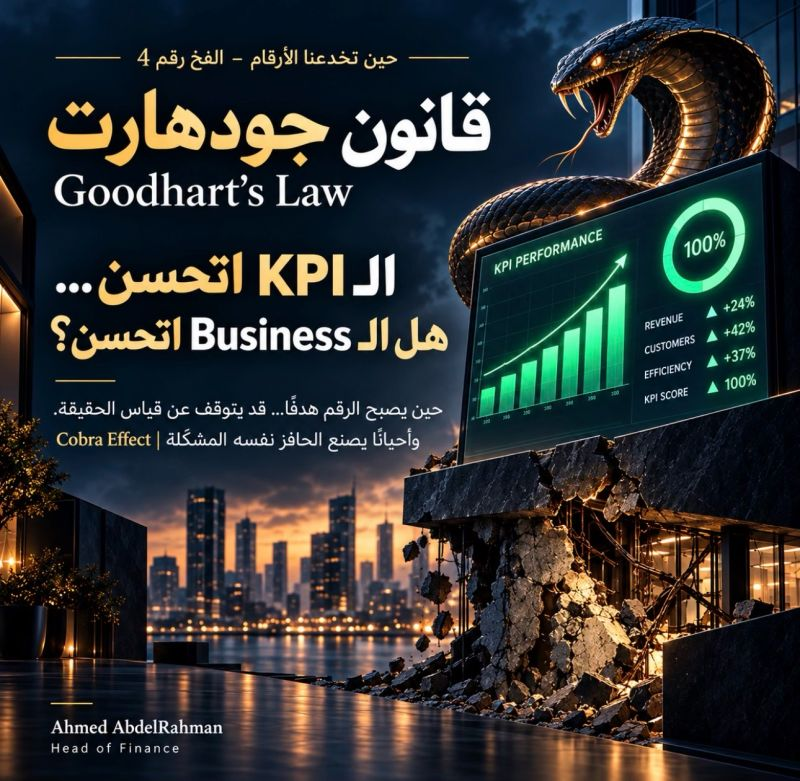
قد يتحسن المؤشر فعلًا بينما يتدهور العمل. هذه هي الفكرة الأشهر وراء قانون جودهارت | Goodhart’s Law.
The KPI can genuinely improve while the business deteriorates. That is the central warning behind Goodhart’s Law.
حين يتحول المقياس إلى هدف مباشر، يتعلم الناس كيف يحسّنون المقياس نفسه، لا بالضرورة الواقع الذي وُضع المقياس لقياسه.
When a measure becomes a direct target, people learn how to improve the measure itself, not necessarily the reality it was designed to represent.
الرقم أخضر وجودة الإيراد تتراجع
The number is green while revenue quality is falling
تقيس الشركة فريق المبيعات بالإيراد وحده. يحقق الفريق المستهدف، وتبدو لوحة المؤشرات كلها خضراء. لكن إن كان الرقم قد تحقق بخصومات أكبر، وشروط سداد أطول، وعقود بهوامش أضعف، فقد تحسن الإيراد فعلًا بينما تراجعت جودته.
A company measures its sales team on revenue alone. The team hits the target and the dashboard is green. But if that number came through deeper discounts, longer payment terms, and lower-margin contracts, revenue has improved while revenue quality has deteriorated.
أو تُقاس الإدارات بالالتزام بالموازنة بنسبة 100%. وبعد فترة قد يتعلم المدير أن يطلب موازنة أعلى من احتياجه الفعلي ليضمن "تحقيق" الرقم بسهولة.
Or departments are measured on 100% budget compliance. Over time, managers may learn to request more budget than they need so that “meeting” the number becomes easy.
هنا لم يعد المؤشر يقيس السلوك فحسب، بل بدأ يصنعه.
The KPI is no longer merely measuring behavior. It has begun to shape it.
فخ قريب لكنه مختلف: تأثير الكوبرا
A related but different trap: the Cobra Effect
يعود الاسم إلى القصة الشهيرة المنسوبة إلى الهند في العهد البريطاني: قيل إن السلطات حاولت تقليل أعداد الكوبرا بدفع مكافأة عن كل كوبرا تُقتل. بدا الحافز منطقيًا، لكن بعض الناس بدأوا يربّون الكوبرا خصيصًا للحصول على المكافأة. فخلق الحل نفسه سلوكًا فاقم المشكلة.
The name comes from a famous story attributed to British India: authorities reportedly offered a reward for each dead cobra to reduce their numbers. The incentive looked sensible, but some people began breeding cobras to claim the reward. The solution itself created behavior that made the problem worse.
هذا هو تأثير الكوبرا | Cobra Effect: تصمم حافزًا لحل مشكلة، فيستجيب له الناس بطريقة تأتي بنتيجة عكسية.
That is the Cobra Effect: an incentive intended to solve a problem produces a response that makes the underlying problem worse.
كيف يحدث هذا في الشركات؟
How does this happen in companies?
تريد شركة خفض عدد الموظفين، فتضع سقفًا صارمًا للتوظيف. ينخفض الرقم فعلًا، لكن الإدارات تبدأ الاستعانة بمتعاقدين ومستشارين بتكلفة أعلى. كان الهدف خفض التكلفة؛ فانخفض عدد الموظفين وارتفعت التكلفة.
A company wants to reduce headcount, so it imposes a strict hiring cap. The number falls, but departments start relying on more expensive contractors and consultants. The goal was lower cost; headcount is down and cost is up.
أو تحصل إدارة المشتريات على حافز قوي مقابل خفض سعر الشراء، فتختار موردًا أرخص، لكن الجودة تنخفض، وتزداد المرتجعات والتوقفات والهدر. تحسن سعر الشراء، لكن التكلفة الإجمالية ارتفعت.
Or procurement is heavily rewarded for lowering purchase price. It selects a cheaper supplier, but quality falls and returns, downtime, and waste rise. Purchase price improves, but total cost rises.
قد يتعلم الناس تحسين الرقم بدلًا من الواقع.
People may learn to improve the number instead of the reality.
قد يخلق الحافز سلوكًا يجعل المشكلة نفسها أسوأ.
The incentive may create behavior that worsens the original problem.
وقد يجتمع الاثنان حين يُربط مؤشر واحد بحافز قوي دون التفكير في السلوك الذي سيخلقه.
The two can combine when one KPI is tied to a strong incentive without considering the behavior it will create.
قبل اعتماد أي مؤشر أو حافز
Before approving any KPI or incentive
- لو حاول الناس تحسين الرقم بأي طريقة ممكنة، فماذا سيفعلون؟
- If people try to improve the number by any available method, what will they do?
- هل يمكن أن يتحسن المؤشر بينما يتدهور العمل نفسه؟
- Can the KPI improve while the business itself gets worse?
- ما السلوك غير المقصود الذي قد يخلقه الحافز؟
- What unintended behavior might the incentive create?
- وما المؤشر المقابل الذي يكشف الصورة كاملة؟
- What counter-metric would reveal the fuller picture?
الإدارة الجيدة لا تهدف إلى أن تبقى لوحة المؤشرات خضراء، بل إلى أن يتحسن الواقع نفسه.
Good management does not aim for a green dashboard. It aims for reality to improve.
أحيانًا لا يكون القرار الأخطر أن تختار مؤشرًا خاطئًا، بل أن تختار مؤشرًا يبدو صحيحًا، ثم تكافئ الناس على تحسينه دون أن تسألهم كيف سيحسّنونه.
Sometimes the most dangerous choice is not selecting an obviously wrong KPI. It is selecting one that looks right, then rewarding people for improving it without asking how they will do so.
مغالطات وانحيازات وفخاخ قرار قد تواجه الماليين.
Fallacies, biases, and decision traps finance professionals may face.