
If two people in a company always agree, the company probably needs only one of them.
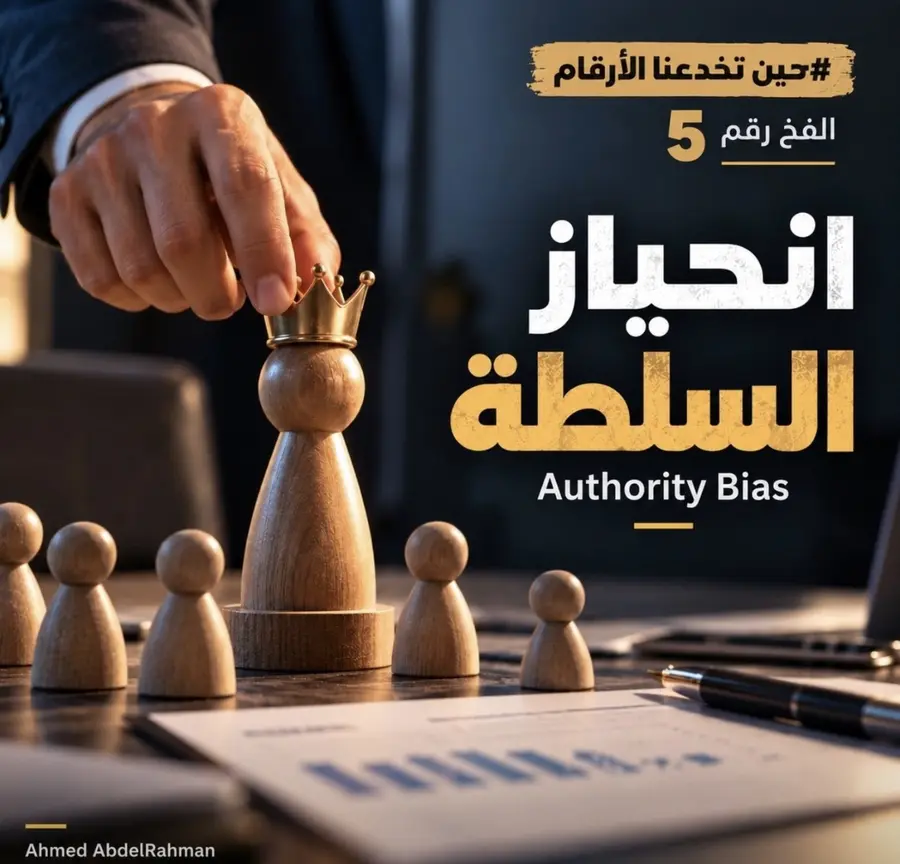
One of the most dangerous biases in decision-making and planning is Authority Bias: giving an opinion more weight than the evidence simply because of the status of the person who expressed it.
From an opinion to a "management assumption"
A number enters the meeting as an opinion, but the room begins treating it as a "management assumption" because of who said it.
The CEO or CFO says, "I think we can grow by 30% next year." The statement itself is unremarkable. The problem begins when 30% stops being a hypothesis to test and becomes the number around which every function builds its plan.
Sales works backwards to justify how it can be reached, Finance builds the model around it, and Operations calculates the required capacity. Before long, no one remembers where the number originally came from.
Experience carries weight, but it is not evidence
This does not mean that the opinion of a CEO, CFO, or board member should be treated as casual commentary. Experience and context matter, and a senior leader may possess information or pattern recognition that others do not.
The problem begins when the speaker's position becomes the evidence for the claim. The team may then shift, often unconsciously, from professionally challenging the hypothesis to finding a way to prove the number is achievable.
When enthusiasm changes the due-diligence question
The same trap appears in acquisitions. If the decision-maker is strongly committed to the deal from the outset, due diligence may gradually move from asking, "Is this a good deal?" to a very different question: "How can we prove this is a good deal?"
The first searches for the truth. The second searches for support for a conclusion that has already been chosen.
Questions and safeguards that reduce the bias
- If the same view came from a junior employee, would I find it equally convincing?
- Was I persuaded by the strength of the argument, or by the speaker's title?
- What evidence would make us reject the hypothesis, even if it came from the most senior person in the room?
- Were independent estimates recorded before the most senior person in the meeting stated a view?
One of the simplest practical safeguards is to have each participant record an estimate or view before the most senior person speaks. The aim is not to oppose management; it is to prevent everyone's thinking from starting at the conclusion already announced by authority.
The greatest danger of authority bias is not that a senior leader may be wrong. It is that intelligent professionals, whose duty is to challenge and exercise scepticism, may stop doing so without noticing.
Fallacies, biases, and decision traps finance professionals may face.